REFERENCES
CUSTOMER PROJECTS
WITH RUNNING ROPES
Offshore
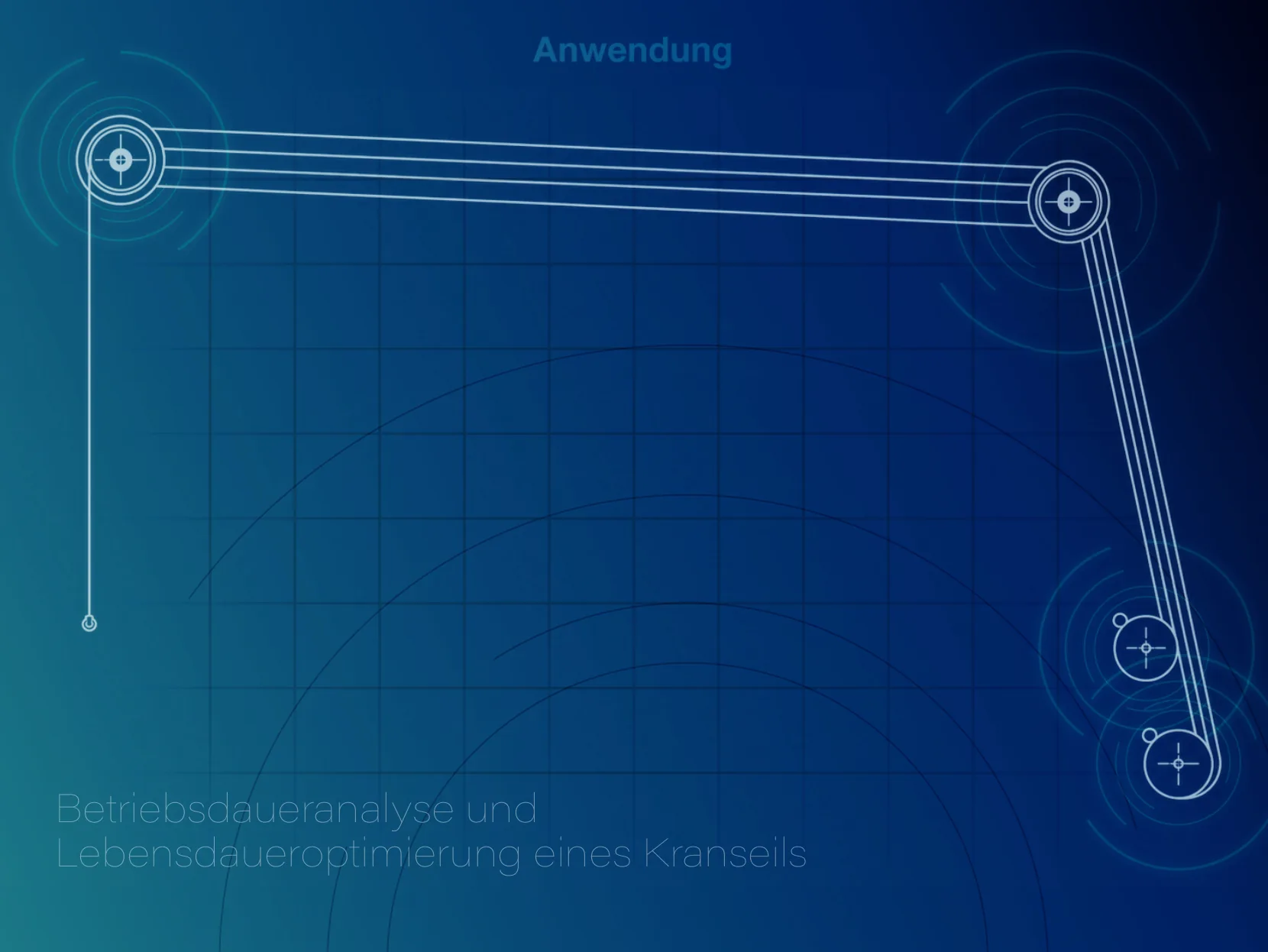
OPERATING LIFE ANALYSIS AND SERVICE LIFE OPTIMIZATION OF A CRANE ROPE
As part of the project, the operating life of a wire rope within a crane system was investigated under realistic load and operating conditions. To achieve this, the load cycles occurring along the rope were simulated and assigned to the respective rope sections in order to identify areas subjected to particularly high stresses.


Based on these findings, an operating life assessment was carried out for different load ranges and operating scenarios. Particular attention was given to the critical rope section exposed to the highest cyclic loading.
In addition, the effects of deliberately shifting the rope by 5 m and 10 m on the distribution of load cycles were investigated. This made it possible to evaluate the extent to which highly stressed areas could be relocated and the usable operating life of the rope extended.
This project demonstrates how we translate real crane movements and load spectra into rope-specific service life assessments and derive concrete measures to optimize rope utilization and operating life.
construction industry
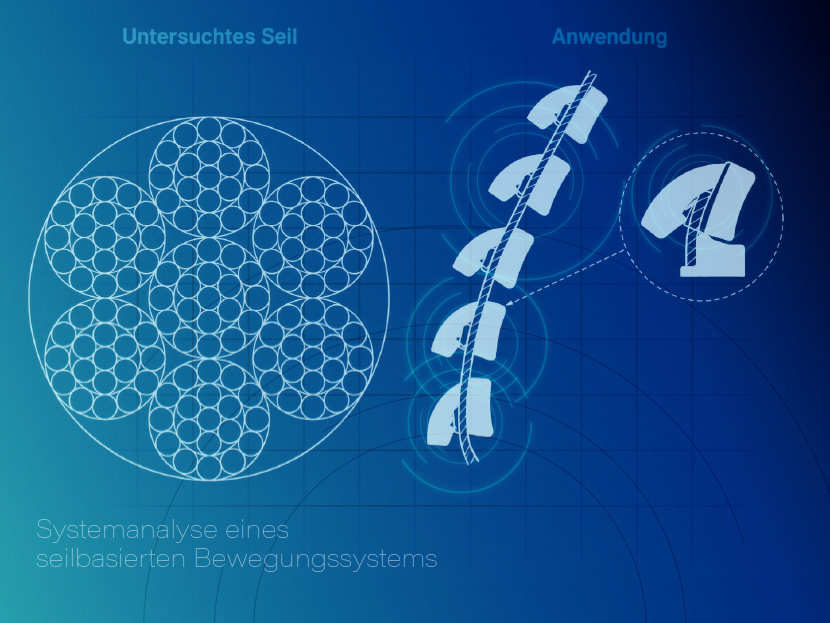
SYSTEM ANALYSIS OF A ROPE-BASED MOTION SYSTEM
As part of a development project, an existing rope-based motion system was comprehensively investigated with regard to rope construction, loading conditions, failure mechanisms, and expected service life.
In addition to experimentally determining the stress-strain characteristics, the actual operating conditions and design boundary conditions of the system were analyzed. These included rope forces, reeving arrangements, D/d ratios, wrap angles, bearing pressures, rope guidance systems, and attachment points. Existing rope damage was assessed and correlated with the loads acting within the system.
Based on the investigation, the rope service life was estimated and potential design optimizations were evaluated. This resulted in specific recommendations for improving rope guidance, reeving arrangements, and the rope construction used.
This project demonstrates how we perform a holistic analysis of complex rope systems, identify root causes of damage, and develop technical measures to increase service life and operational safety.
Aerospace
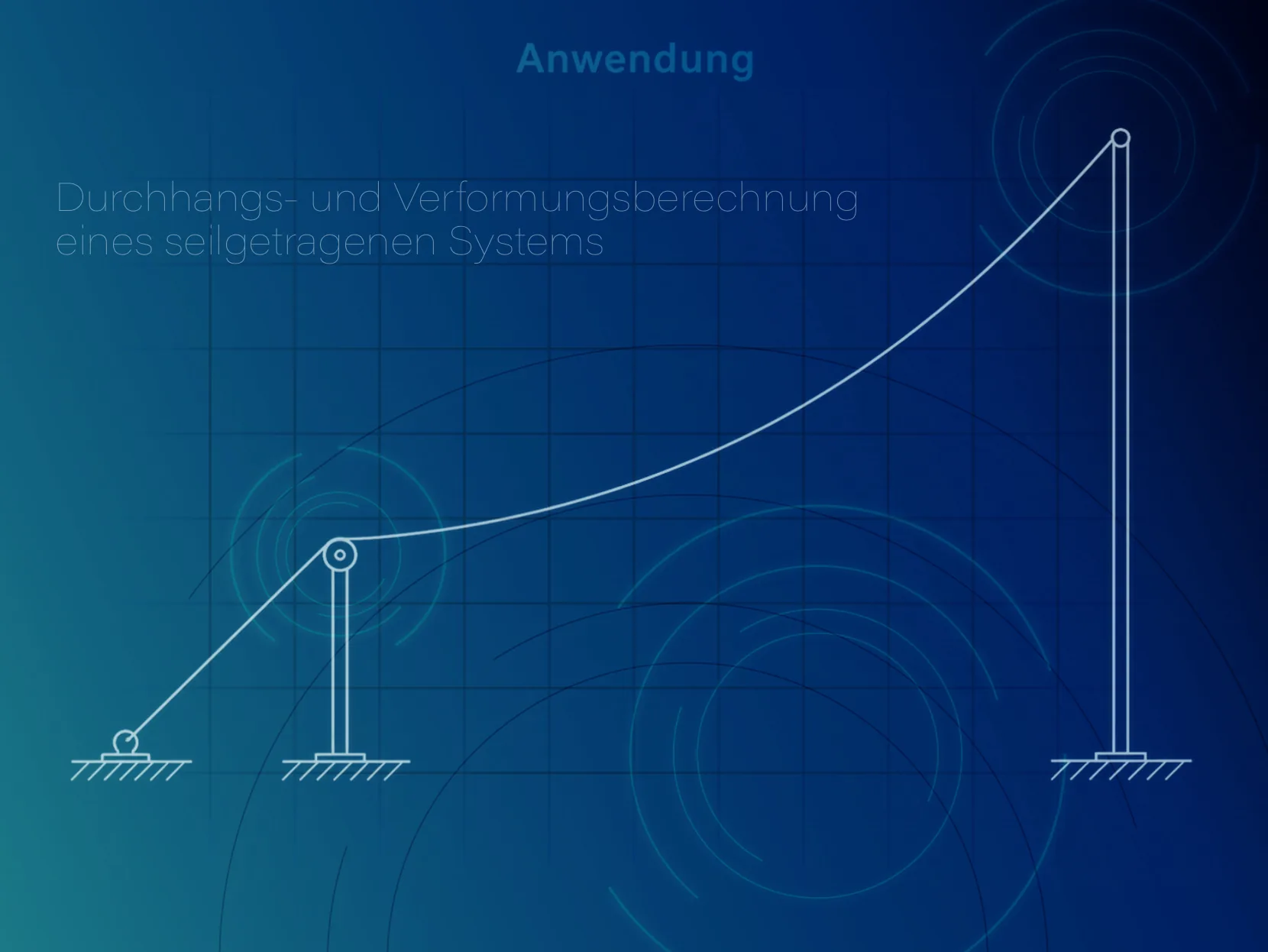
SAGGING AND DEFORMATION ANALYSIS OF A ROPE-SUPPORTED SYSTEM
As part of the project, the sagging and deformation behavior of a long wire rope under various loading conditions was investigated. The analysis was based on modelling the rope profile as a catenary curve under its own weight as well as under additional external loads.
For various rope diameters and load cases, parameters including rope tension forces, sag, rope geometry, and length changes were calculated. In addition, the effects of permanent rope elongation during operation were examined to determine how they influence the geometry and behavior of the overall system.
Alongside the baseline operating condition, critical load cases, varying payloads, and additional loads such as wind were also considered. Furthermore, the impact of re-tensioning the rope on the resulting system geometry was evaluated.
This project demonstrates how we engineer complex rope systems through analytical calculations, simulate different operating and loading scenarios, and assess their effects on rope forces, sagging behavior, and overall system geometry.
Interior Design
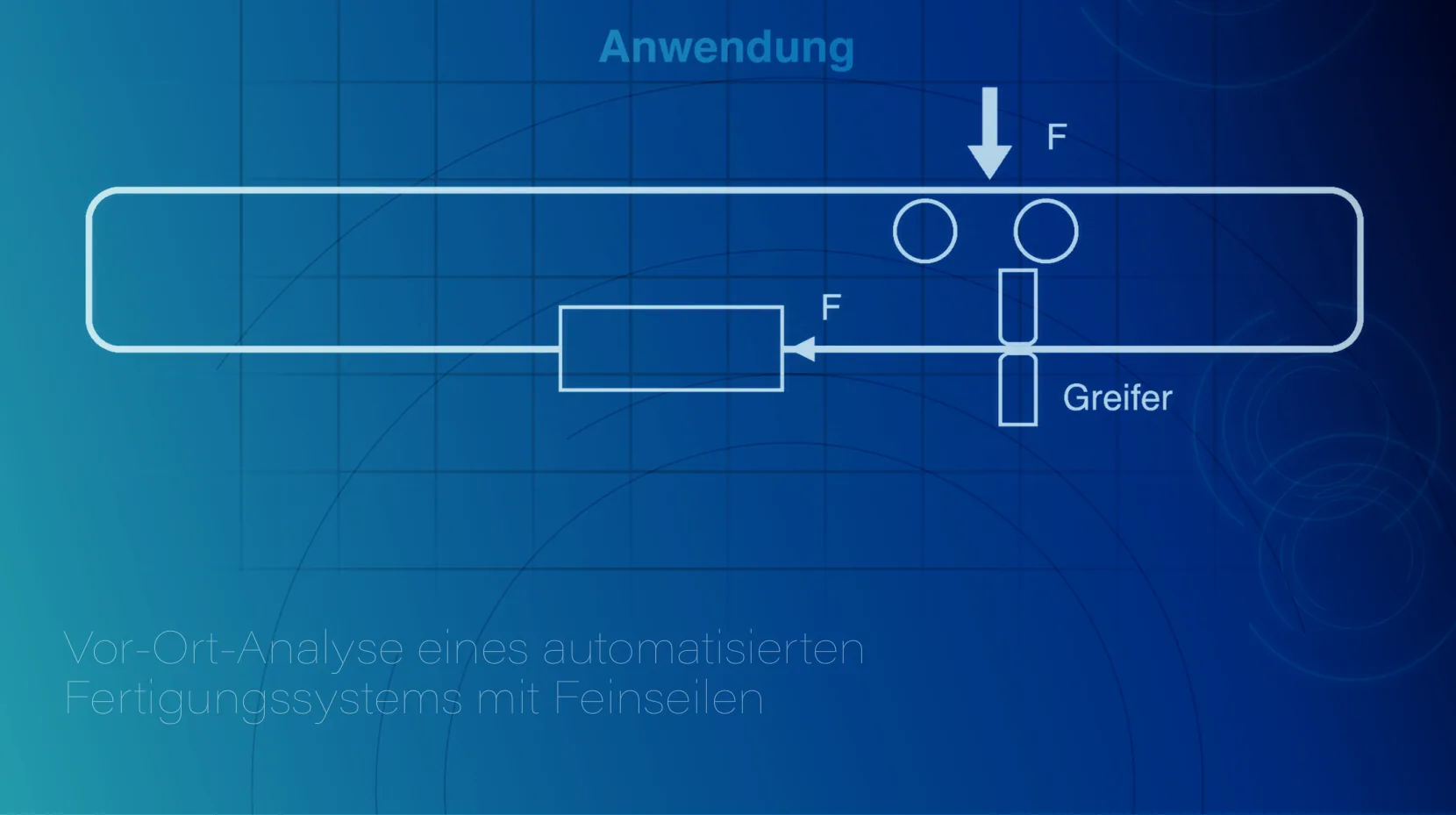
ON-SITE ANALYSIS OF AN AUTOMATED MANUFACTURING SYSTEM USING FINE WIRE ROPES
As part of the project, a fully automated manufacturing system utilizing fine wire ropes was investigated directly on site after undesirable twist accumulation had been identified within the rope system during operation.
The analysis initially included a detailed assessment of the existing system and the relevant operating conditions. Subsequently, potential causes of the twist accumulation were systematically evaluated, particularly with regard to rope guidance, reeving arrangements, installation conditions, rope construction, and interactions within the movement sequence.
Based on the on-site investigation, various technical solutions for reducing or preventing twist accumulation were developed and assessed with regard to their practical implementation.
This project demonstrates how we analyze fine-wire-rope applications directly within complex automated systems, identify the root causes of undesirable rope behavior, and derive practical optimization measures for more stable and reliable operation.